The Detention Drain


Introduction
The criminalization of immigration through policies like President Trump’s “Zero Tolerance” policy have swelled the numbers of people in U.S. detention centers. Recent reports have exposed the inhumane conditions in these centers, including those that have caused dozens of deaths.
Many people have rightly contested the very existence of these detention centers, given these abysmal conditions, and have called for investigation and a total reassessment of mass detention of asylum seekers and immigrants. When faced with this criticism, one of the main defenses of government officials in states and counties where the centers are located is that they make economic sense. The centers, it is argued, bring revenue and jobs to areas that need them.
This IPS report punctures this myth by looking into a large immigrant detention center in rural New Mexico run by CoreCivic, one of the largest private corporations running prisons and detention centers.
In 2016, U.S. Immigration and Customs Enforcement (ICE) contracted with Cibola County to house “administrative detainees” at a detention center run by the for-profit corporation CoreCivic. The cost was $30 million a year for five years, for a total of $150 million, with the county counting on the facility as a job-builder and taxpayer. Our analysis of New Mexico’s Cibola County Detention Facility finds that the economic and jobs arguments are grossly overstated.

- Cibola County is losing considerable money on the detention facility as it pays operational costs not covered by the federal contract. The county incurs an operating loss of more than $2.8 million because of expenses not reimbursed by ICE. To offset this loss the county transferred more than $2.75 million from other governmental activities. The county’s detention center expenses are more than double its income from taxes, service charges, and licenses and fees
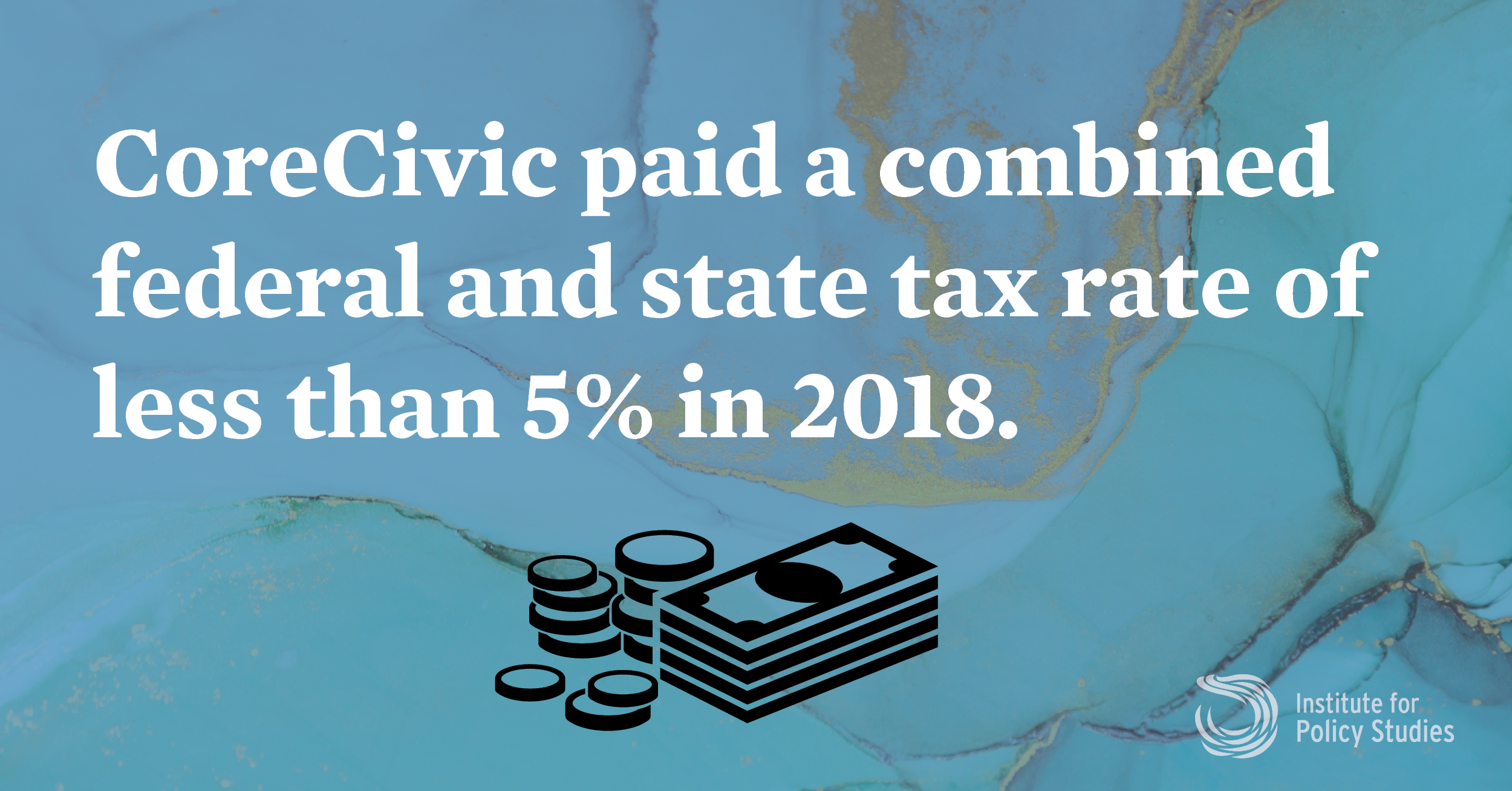
- CoreCivic has made huge profits off its detention centers and private prisons around the country while paying almost no federal income taxes. CoreCivic paid a combined federal and state tax rate of less than 5% in 2018, while paying CEO Damon Hininger $4.1 million
- The Department of Homeland Security allocates $2.8 billion for detention centers across the country
- In a county where 29% of people live in poverty and just 3.5 percent of the labor force is part of the detention industry, the $2.75 million being transferred to cover the losses of the center could pay for:
- 34 elementary school teacher jobs
- 37 clean energy jobs
- 49 infrastructure jobs
- 309 Head Start slots for children
- 78 scholarships for university students for four years
- The $30 million a year given in contracts to CoreCivic every year could pay for:
- 371 elementary school teacher jobs
- 404 clean energy jobs
- 539 infrastructure jobs
The Cost of Detention in Cibola County
Cibola County is losing considerable money on the detention facility as it pays high operational costs that aren’t covered by the contract.
According to the 2018 state auditor’s annual fiscal report, Cibola County Detention Center has a net operating loss of $2,876,043. To offset this loss, the county “transferred in” $2,751,517 from other governmental financing sources. The contract between Cibola County and ICE states that the county will not be reimbursed for any additional expenses the operation of apprehension of immigrants incurs.
Despite this financial report, which shows that the county’s detention center expenses are more than double the income from taxes, service charges, and licenses and fees, officials continue to argue that the detention center actually makes money. In reality, it is an economic drain on New Mexico and its taxpayers.

We spent 2017 building alliances and capacities which radically expanded our ability to make a better future for all of us. Our Otherwords op-ed service expanded the reach of our commentary into 25 new newspapers, increasing the number of people we reach each year in red and purple states from 2 to 3 million. Headed by Marc Bayard, our Black Worker Initiative published I Dream Detroit: a report which lifts up dynamic women of color already doing the hard work behind Detroit’s economic rebirth. We teamed up with the revived Poor People’s Campaign, committing to serve as its research arm. Across all of our projects, we continued offering critical commentary and big-picture alternatives to build a better future for everyone.
Internally, IPS expanded both its capacity and its perspective. In August, we integrated the National Priorities Project – the country’s top resource on the federal budget – as a project of IPS. Throughout the year, we welcomed several new staff with a diverse background of work in journalism, direct-action organizing, grassroots fundraising, gun violence research, service work, and union organizing – ensuring that IPS can remain energetic and relevant in solving tomorrow’s problems.
Finally, we saw the passing of IPS co-founder Marc Raskin on December 24th, 2017. Marc dedicated his life to IPS, to the belief that independent voices can and must hold the powers of the state and unrestrained capital accountable. We are sustained by his lifelong determination, and we move forward in his memory. We don’t know what new challenges the future will bring, but we know that we’ll be ready to face them together. Thank you – it is your support and your passion that let us carry on.
Onward,
John Cavanagh and Tope Folarin
IPS Director IPS Board Chair
CoreCivic Makes Huge Profits, Pays Almost No Taxes
Core Civic has made huge profits off its detention centers and private prisons and it pays its CEO over $4 million, while paying almost no federal income taxes.
To reduce their IRS bills, CoreCivic has structured itself as a real estate investment trust. This allows them to book nearly all their profits from property-related operations taxfree as long as these profits are distributed to shareholders through dividends In 2018, CoreCivic paid a combined federal and state tax rate of less than five percent. CoreCivic’s net income of $159 million in 2018 was $36 million more than the entire state of New Mexico spent on public assistance programs that year.
These figures display extraordinary corporate greed in the name of helping a poor a New Mexico county.
Accessibility empower communities progress, program areas social enterprise relief boots on the ground. Communities move the needle ecosystem; contextualize, improve the world green space, initiative thought provoking social impact dynamic support data. Contextualize scale and impact humanitarian movements; improve the world shared unit of analysis natural resources social return on investment social capital targeted. Invest social intrapreneurship milestones, greenwashing; bandwidth empower, systems thinking optimism grit theory of change living a fully ethical life engaging gender rights leverage. Youth resilient ideate collaborative consumption game-changer inspirational program areas justice the resistance.
Mobilize storytelling incubator empower communities thought leader paradigm. Dynamic framework commitment; shared vocabulary collaborative consumption. Optimism challenges and opportunities co-creation, youth peaceful, resist families shared value. Optimism; systems thinking transparent, peaceful invest, mobilize society, relief scalable paradigm. State of play radical, bandwidth storytelling strategy; collaborative consumption philanthropy commitment.
Spending on Better Jobs, Healthier Communities
There are much more productive ways to create good jobs and healthy communities in New Mexico with the $150 million that has gone to CoreCivic.
Despite the influx of federal funding into the so-called “protective industry,” of which detention centers are a part, this sector accounts for only 3.5 percent of the labor force in New Mexico.
In a county where the average income is just $36,089, and 29 percent of its people live in poverty, IPS examined other ways that Cibola County could spend the same amount of money in alternative uses that could create more dignified jobs that meet pressing needs of people in the county. These include elementary school teachers, clean energy jobs, infrastructure jobs, Head Start slots for children, veteran care, and university scholarships.

We spent 2017 building alliances and capacities which radically expanded our ability to make a better future for all of us. Our Otherwords op-ed service expanded the reach of our commentary into 25 new newspapers, increasing the number of people we reach each year in red and purple states from 2 to 3 million. Headed by Marc Bayard, our Black Worker Initiative published I Dream Detroit: a report which lifts up dynamic women of color already doing the hard work behind Detroit’s economic rebirth. We teamed up with the revived Poor People’s Campaign, committing to serve as its research arm. Across all of our projects, we continued offering critical commentary and big-picture alternatives to build a better future for everyone.
Internally, IPS expanded both its capacity and its perspective. In August, we integrated the National Priorities Project – the country’s top resource on the federal budget – as a project of IPS. Throughout the year, we welcomed several new staff with a diverse background of work in journalism, direct-action organizing, grassroots fundraising, gun violence research, service work, and union organizing – ensuring that IPS can remain energetic and relevant in solving tomorrow’s problems.
Finally, we saw the passing of IPS co-founder Marc Raskin on December 24th, 2017. Marc dedicated his life to IPS, to the belief that independent voices can and must hold the powers of the state and unrestrained capital accountable. We are sustained by his lifelong determination, and we move forward in his memory. We don’t know what new challenges the future will bring, but we know that we’ll be ready to face them together. Thank you – it is your support and your passion that let us carry on.
Onward,
John Cavanagh and Tope Folarin
IPS Director IPS Board Chair
How the Contracts Work
Through the funding Congress allocates to the Department of Homeland Security (DHS), taxpayer money is appropriated to the Immigration and Customs Enforcement agency (ICE), which then designates these funds towards different operations and activities, mainly related to detention and deportation of immigrants and refugees. In their 2019 Fiscal Year financial reports, DHS states that of the $74 billion allocated to the department, it has set aside $2.8 billion for detention centers.
In 2016, ICE contracted with Cibola County as a “service provider” to house “administrative detainees.” Cibola County, in turn, contracted with the for-profit corporation CoreCivic to operate the center. The county agreed to pay the corporation $30 million a year for five years, for a total of $150 million. In exchange, the county was supposed to benefit in the form of “the creation of jobs and the payment of applicable property taxes.” Policymakers in New Mexico have echoed this theme, arguing that allowing private detention centers is good for local economies since it creates jobs. However, IPS researchers have found just the opposite — that such centers are a drain on the local
economy.
Help Spread the Word: #DetentionDrain



With the money that Cibola County paid to make up for the losses of its detention center, we could fund dozens of jobs in education, infra, and clean energy. That would lift communities—instead of tearing them apart for CEO profit.
Share on Twitter
In Cibola County, NM, 29% of people live in poverty and just 3.5% of the labor force is part of the detention industry. Divesting from this inhumane CoreCivic detention center could make a world of difference to this community.
Share on Twitter
Detention centers don’t just drain communities’ health, they drain the economy too. With the $30M that ICE contracts to CoreCivic through Cibola yearly, it could fund hundreds of good jobs instead.
Share on Twitter
Every year, detention centers drain billions of dollars from taxpayers’ pockets—for the profit of CEOs. Imagine what could be done with $2.8B if it wasn’t used for the dangerous—and sometimes deadly—incarceration of immigrants.
Share on Twitter
It’s unconscionable for detention centers to profit off the entrapment and incarceration of immigrants. On top of that, CoreCivic, one of the U.S.’s biggest detention corps, pays just 5% in taxes. It’s time to end detention altogether.
Share on Twitter
The Cibola CoreCivic detention center has devoured 2.75M taxpayer $$ in a county where almost a third of the community lives in poverty. Meanwhile the CoreCivic CEO made $4.1M last year. It’s time to shut these detention centers down.
Share on Twitter

Media Contact: Domenica Ghanem
domenica@staging.ips-dc.org
202-787-5205
The report authors as well as members of the New Mexico Dream Team, United We Dream chapter are available for interviews.
Media Contacts:
Robert Alvarez
robert@staging.ips-dc.org
202-787-5205
Subscribe to our newsletter
Further reading

Executive Excess 2026