Making Schools Safer with Restorative Justice


Introduction
In Riverside County, California, a School Resource Officer was alerted to a confrontation between two students a block from their school. When the armed officer arrived on the scene, one of the female students was walking away from the confrontation. The officer told her to stop. Video of the incident then showed her on the ground with three officers around her as she was trying to get up, and the SRO is seen yanking her around and pushing her back onto the ground.
In a North Carolina high school, an SRO was trying to break up a fight and tased the students. In the ensuing commotion, a student struck a teacher. The SRO then body-slammed the female student to the ground. She fell unconscious and had a seizure.
Another North Carolina SRO grabbed an 11-year-old boy and body-slammed him into the floor, picked him up and body-slammed him again, knocking him unconscious.
In a Broward County, Florida school for children with emotional disabilities, an SRO grabbed a student by her neck and threw her on the floor of a classroom.
Stories like these are all too common.
At a time when school districts are investing billions of dollars annually to put armed law enforcement officers in schools, we should ask whether this approach promotes student safety or threatens it. How could even a fraction of that money be invested to better promote student well-being and safety?
The criminal juvenile system, much like the adult system, is coordinated around punishment and incarceration. Youth who have misbehaved, been involved in misdemeanors, crimes, or otherwise transgressed are processed through the courts and sent to juvenile detention centers.
Such criminalization is part of a retributive system known as the school-to-prison pipeline, in which students are pushed out of the education system and into the criminal legal system, — often for minor infractions and misbehavior.
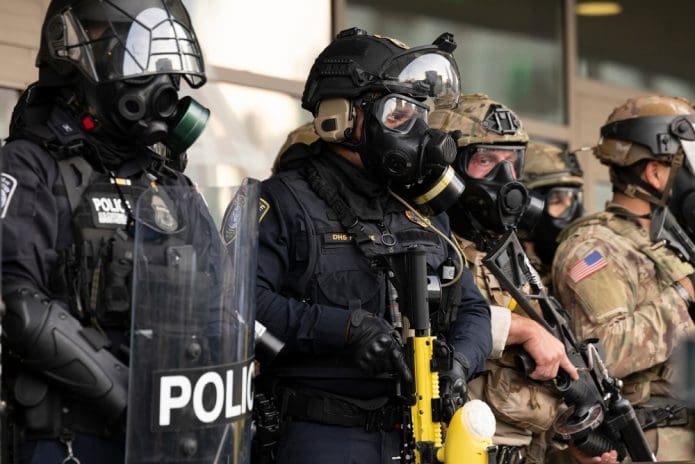
In schools, armed law enforcement officers known as School Resource Officers (SROs) patrol campuses across the country, at a cost of $2.6 billion annually. A growing body of evidence suggests that the presence of SROs in schools is resulting in more suspensions, expulsions, arrests, referrals to juvenile criminal systems, and violence against children, contradicting the claim that they make students safer. Meanwhile, there is no credible evidence to show that SROs deter school shootings.
Alongside SROs, zero-tolerance policies in schools and “school disturbance” laws in several states criminalize juvenile misbehavior. These policies increase students’ proximity to the criminal legal system and incarceration, which is proven to be detrimental to their educational outcomes and future prospects.
Students in already vulnerable populations are disproportionately harmed. Black, Latinx, Native American, disabled, and LGBTQ students receive harsher punishment than their white peers for the same offenses. And Black, Latinx, and other students of color broadly are more likely to be funneled into the criminal legal system when SROs are present in schools.
A punitive approach to juvenile justice is actively hurting children across the country. A wealth of research suggests Restorative Justice is a more effective alternative. This report outlines findings on Restorative Justice and argues that an expanded transition to Restorative Justice is the best way to help children succeed.
Youth Incarceration: An Ongoing Crisis
While youth incarceration has dropped in the last two decades, it remains a pertinent issue nationwide. Youth incarceration has coincided with lower high school graduation rates and further interactions with the school-to-prison pipeline. The American Civil Liberties Union defines the pipeline as “the policies and practices that push our nation’s schoolchildren, especially our most at-risk children, out of classrooms and into the juvenile and criminal legal systems.”
The presence of SROs, zero-tolerance policies, and laws criminalizing juvenile behavior are all key components to the school-to-prison pipeline. In 2023-2024, 48% of U.S. public schools had an SRO, and 92% of them carried a firearm. They are there for public safety, but their effectiveness is questionable. According to a review published by the Campbell Collaboration, the evidence does not support the claim that the presence of School Resource Officers deter school violence. A report by the Urban Institute found no correlation between the presence of armed SROs and a reduction in the severity of school shootings. In fact, it cites a study that finds deaths during a school shooting increases nearly three-fold when armed SROs are present. And Everytown USA finds that there is no reduction in school-based gun incidents due to the presence of armed SROs.
Yet while there are few demonstrable signs that SROs contribute to safety, there is a growing body of evidence that their presence can actually be harmful for students in other ways.
- Black students are substantially more likely than white students to experience exclusionary discipline: a 2024 analysis found Black students were 3.6 times more likely to receive out-of-school suspensions, 2.5 times more likely to receive in-school suspensions, and 3.4 times more likely to be expelled.
- The likelihood of students being arrested for in-class behavior increases as the presence of SROs on campus increases
- Students at schools with SROs on campus are 5 times more likely to be arrested for disorderly conduct than students at schools without them.
Zero-tolerance policies are severe predetermined consequences that are applied “regardless of the gravity of behavior, mitigating circumstances, or situational context.” There was widespread adoption of these zero-tolerance policies in U.S. public schools in the 1990s in an attempt to create safer school environments.
However, the American Psychological Association found little data to support these assumptions — and the data that did exist indicated a detrimental effect on student well-being.
In a 2008 paper, they cite a story in which a 10-year-old girl found a small kitchen knife in her lunchbox that her mother had included for her to cut her apple. Even though the little girl promptly turned the knife over to a teacher, she was expelled from the school for “possessing a weapon.”
Zero-tolerance policies disproportionately impact different populations, such as Black students and LGBTQ students. According to a 2019 report from the Southern Education Foundation, Black girls in secondary schools were suspended at rates 45 times higher than white girls. For LGBTQ students, if they are being bullied for their gender or perceived sexual presentation and they try to defend themselves, they are often punished even more harshly than the bully, according to the ACLU.
Alongside zero-tolerance policies are “school disturbance” laws that criminalize student misbehavior. In 2022, the American Criminal Law Review found 20 states that have at least one of these laws.
An example of a “school disturbance” law is in the 2025 Maryland Education Code. It states, “A person may not willfully disturb or otherwise willfully prevent the orderly conduct of the activities, administration, or classes of any institution of elementary, secondary, or higher education… Any person who violates any provision of this section is guilty of a misdemeanor and on conviction is subject to a fine not exceeding $2,500, imprisonment not exceeding 6 months, or both.”
This broad language allows for the possibility that students who misbehave by interrupting class or talking loudly could be subject to legal repercussions.
Zero-tolerance policies and school disturbance laws are sending thousands of children to juvenile facilities and away from the classroom. Children of color are particularly vulnerable; while overall youth detainment is decreasing, the share of Black youth detained has increased, from 38% of all youths detained in 2003 to 46% in 2023.
In fact, Black youth are 5.6 times more likely to be detained or committed to juvenile facilities than their white counterparts. In FY25, Black youth in Maryland were almost 5 times more likely to face adult criminal charges than white youth for the same offenses.
Youth of color in general experience disproportionately higher arrest and placement in juvenile detention centers rates than white youth.
Queer youth and youth of color with disabilities are also overrepresented in youth incarceration. While an estimated 9.5% of U.S. youth identify as LGBTQ, 28% of incarcerated youth are LGBTQ. It’s estimated that up to 70% of youth in juvenile detention facilities have physical, mental, or emotional disabilities. The odds of neurodivergent youth reporting abuse by facility staff are nearly 70% higher than their neurotypical peers, and the odds of detained Black youth reporting abuse by facility staff are nearly 80% higher than their white peers.
In October 2023, juvenile facilities held 29,314 youths in a total of 1,277 detention centers, residential treatment centers, group homes, and youth prisons across the United States.
The violence youth incarceration inflicts upon children is twofold: they face abuse inside the facilities and are cut off from vital educational opportunities outside the facilities. The Brookings Institution found that a student’s arrest may increase their likelihood of dropping out by 25%, obstructing their path toward graduation and higher education.
Schools, governments, and other institutions must recognize that a punitive approach to juvenile justice is not working. Restorative Justice provides institutions an effective, efficient, and empathetic approach to achieving justice and better outcomes for youth.
Restorative Justice: An Effective Alternative to Zero-Tolerance
Restorative Justice (RJ) is a collaborative process in which a person who has committed harm takes accountability in a structured and mediated process with those affected by the harm. This process has proven to effectively address trauma, mend communal relationships, and guide the restoration of the harm by working with those involved to ensure that those who commit harm meaningfully take accountability for their actions and successfully reintegrate into the community.
The U.S. has a punitive criminal legal system in which someone who has committed harm is punished and locked up, with no attention to restoration, rehabilitation, and resolution with those affected by their actions. The public school system largely operates the same way. Studies show that once a student is criminally punished in this way — often for infractions subjectively labeled by authority figures as “bad behavior” — they are more likely to end up in the prison system as adults.
It doesn’t have to be this way.
Restorative Justice in schools is an effective alternative to incarceration, one much more favorable to those who care about children’s future outcomes.It’s designed to hold the person committing the harm to account in a way that keeps that person from committing harm again and restores well-being to those who have been harmed.
While an exact number is difficult to quantify, the Sentencing Project estimates there are 150 RJ diversion programs across the country, concentrated in Washington, D.C., Maine, Connecticut, Nebraska, Colorado, North Dakota, and Vermont.
In diversion programs such as RJ, people have the opportunity to participate in alternative programs rather than be processed through the courts.
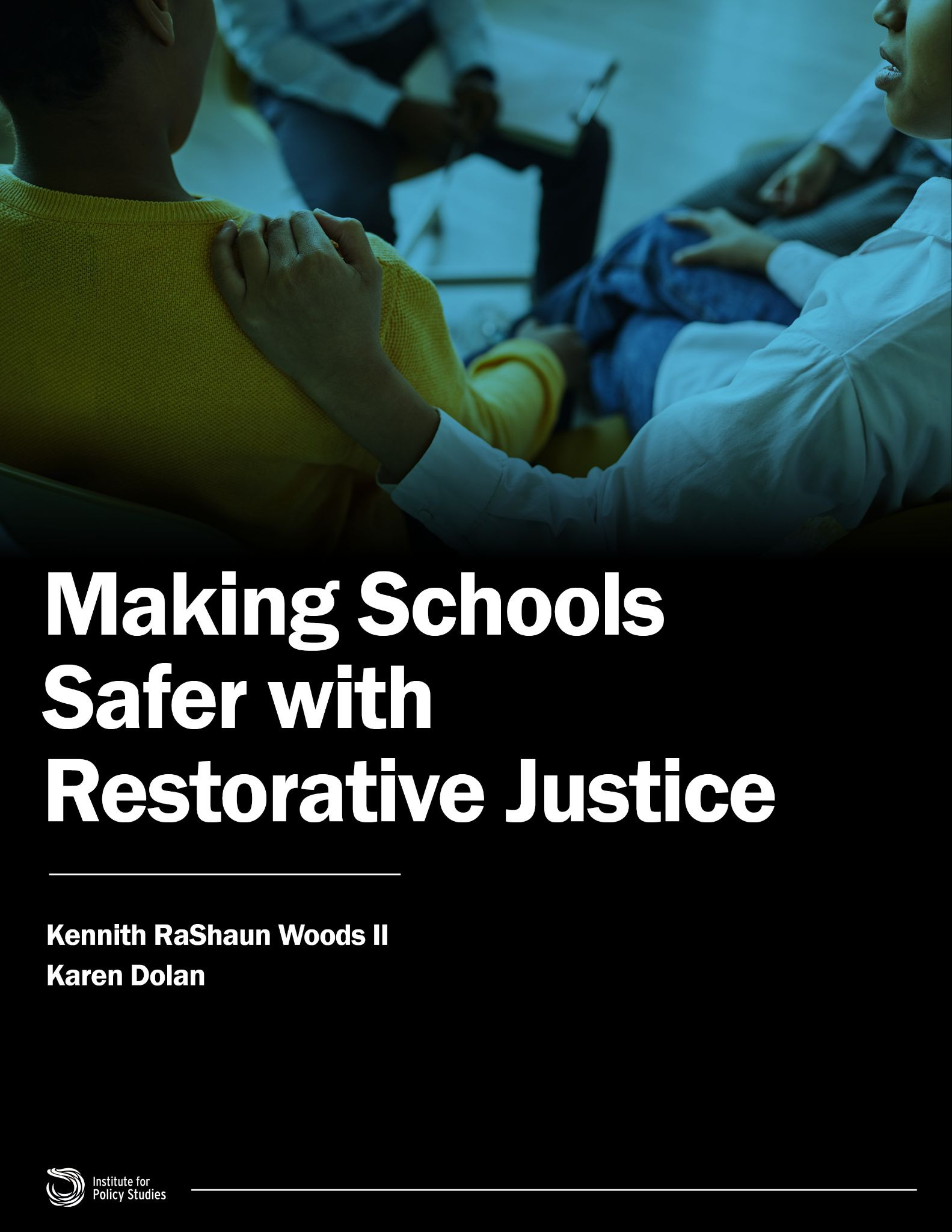
Restorative Justice programs in schools center the person who was harmed and hold the person who committed harm to account. Alongside the person who was harmed, the person who committed the harm and community members participate in the conversation. Trained facilitators help coordinate with other stakeholders and mediate the discussions.
Programs usually target youth accused of committing minor offenses, though some programs target youth accused of committing more serious crimes. Restorative Justice tools include mediation, community conferencing, and circles, which are structured, curated discussions meant to make all participants feel equal and valued.
Restorative Justice participants aim to achieve healing, understanding, and accountability. Success can take the form of contracts that stipulate specific steps youth who committed harm must take following the RJ program.
The Sentencing Project found most youth in RJ programs participate in a conference and “forge an agreement to repair the harms of their offense and complete other activities that help them avoid reoffending.”
Results from RJ programs across the country are encouraging. For example, research has found that the rate of reoffending for those who participated in RJ is one-third lower than those who didn’t, and any subsequent offenses are typically less severe.
Those who have experienced harm consistently report higher rates of satisfaction with RJ programs than with the criminal legal system, as it more acutely tends to their needs for emotional restoration, a genuine apology from those who committed the harm, and restitution in the form of returned property or other value.
RJ programs have led to significant reductions in PTSD, a desire for revenge, negative emotions, and a “greater sense of security and empowerment.” Finally, the 12-month recidivism rate was 4% for those diverted to RJ, compared to 29% for those who went through the traditional court process.
The Office of the Ramsey County Attorney in Minnesota studied the effects of Restorative Justice programs they began in 2021. They completed the study by comparing the outcomes of two equally sized groups of children — one group that was processed traditionally through the court system and another group that was diverted to RJ programs.
Their results follow national trends: youth diverted to Restorative Justice programs consistently showed lower recidivism and re-referral rates compared with youths processed traditionally through the court.
Studies on RJ programs, both nationwide and at the local level, reaffirm its viability as an alternative to retributive justice. It professes that justice is more than punishment; it is a collaborative process in which accountability for wrongdoing, healing from trauma, and reintegration into the community are key strategies for addressing harm and moving forward together. Retributive justice rejects this framework.
Disparities and negative outcomes persist for children in the criminal legal system. Restorative Justice says these disparities are not inevitable, and we can begin addressing them by bringing the community together.
Recommendations
Restorative Justice is a crucial strategy for combating the school-to-prison pipeline and preparing students to achieve and thrive. Currently, only a handful of states offer RJ programs — and even there, they often aren’t made equitably available.
The Sentencing Project found that multiple factors, including inequitable policing practices in minority neighborhoods and harsher comments from judges against minority youth, have led to a high disparity in RJ diversion rates between white youth and youth of color. Even within a proven alternative framework for justice, plenty of work remains to make the realities of our children’s lives more equitable.
School systems and local and state governments should:
- End zero-tolerance programs in schools.
- Eliminate School Resource Officers from schools.
- Reinvest that funding into Restorative Justice programs and stabilize them through legislation and consistent funding.
- End zero-tolerance programs in schools.
- Remove “school disturbance” laws from state statutes.
- Equitably refer children of all backgrounds to Restorative Justice programs.
Research has proven RJ is preferable to zero-tolerance policies, which are harmful to children and their future outcomes. Institutions should consider RJ a powerful tool in addressing the school-to-prison pipeline, combating inequitable outcomes across demographic lines and setting youth on a path towards educational success.
Conclusion
The criminal legal system is a counterproductive and often violent force against children, particularly Black and brown children, LGBTQ children, and children with disabilities. We must work to make justice meaningful and transformative, rather than simply punitive. The zero-tolerance system doesn’t improve student well-being — it results in youth suffering from the criminal legal system with little chance to set their life back on track.
Restorative Justice is an effective alternative to the current system. Children and community members report high levels of satisfaction with RJ programs. The outcomes for children diverted to Restorative Justice programs far exceed the outcomes for children processed through the courts.
If the goal is to limit children’s interactions with the criminal legal system and dismantle the school-to-prison pipeline, schools, governments, and other institutions should strongly consider a proven, thoroughly researched alternative to retributive justice. Restorative Justice, if implemented in communities across the country, will help keep children on the path toward brighter, more equitable, and safer futures.
Subscribe to our newsletter
Further reading

A Perfect Storm: How Federal Policy Changes Are Increasing Economic Insecurity for America's Families