VIDEO: Working Together to Advance the For All Agenda


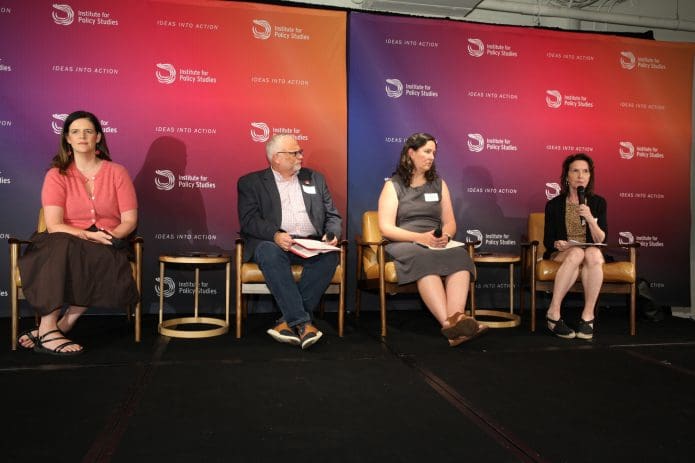
Below is a lightly edited transcript of a panel at our third annual Wallace Symposium, called “Forging a Democracy That Works for All.” Watch and read more from the symposium here.
Katrina vanden Heuvel: I come from Zohran Land. I bring joy to this city where National Guardsmen prowl.
Zohran Mamdani is a candidate we endorsed. We endorse The Nation. We endorsed Bernie Sanders in 2016 and in 2020. And if you believe Bernie Sanders lost, I have something to tell you. He’s changed the narrative, the political alignment, in the same way Henry Wallace did. Maybe even more so because he did it inside the Democratic Party, which is a different discussion.
But Zohran yesterday showed his governing as a democratic socialist. When he sat in front of a camera, and spoke about Netanyahu as a war criminal, and said that the city couldn’t do anything that he had explored, but the federal government could with the ICC—that is an alignment. That is a change in political force. And he’s relevant today because we’re going to talk about that vision thing.
There are many agendas, because everyone here understands that it’s not sufficient to defeat Trump. That we need our ideas, our bold ideas. And in that context we have three terrific people. I wanted to pick up on three throughlines very quickly. And it’s very dangerous to say three. I remember Rick Perry, who forgot what the third was.
The first throughline is that The Nation has been a collaborator and vice versa with IPS for more than 40 years, since its founding. John Cavanagh, Tope, Chuck Collins, Sarah Anderson and Bob Borasage. We have done inequality issues, which won a Sidney Hillman Award. We did an Alternative State of the Union in 2006 with the Progressive Caucus. So we are aligned, and we believe in ideas in action.
The other throughline is that The Nation was founded in 1865 (and you can feel 160 years old this afternoon in D.C. if you want). It was founded on the throughline that there’s no real democracy if you have military misadventures abroad. The Anti-Imperialist League was founded at The Nation. Mark Twain was one of those, and the editors of The Nation.
And the other throughline is Minnesota. The Nation decided—and we’re at the 15th anniversary of Occupy—that what happened in Minneapolis last winter was something important. Citizens showed their solidarity, their community, with support from electeds, but it was people in the streets protesting ICE. And two good people were killed brutally. We nominated Minneapolis for a Nobel Peace Prize. And I think that means something. But it’s the first time a municipality has been endorsed, and we’re in touch with the Secretariat every week, and we continue to campaign with organizers. If you want to learn more, go to thenation.com.
But now I’m going to turn to this great panel. I’m going to start with Lindsay Owens from Groundwork, who has an important agenda taking on corporate abuse. Lindsey, in your forthcoming book Gouged, you trace how corporate profiteering and monopoly power have led to price hikes across the economy, with mega corporations enjoying record-breaking profit margins while everyday consumers struggle to pay gas prices, groceries, diapers, prescription drugs. What’s taking place behind the scenes in these corporate boardrooms? But more broadly, how do you assess the anti-monopoly, antitrust politics to take on these times?
Lindsay Owens: Great, good first question. Thanks so much for inviting me to be here. I should just say quickly, I’m a huge fan of IPS. I have been following their work so closely since I got to Washington in 2014, and that really hasn’t been by accident. It’s because everywhere I go, IPS is there. When I was in Senator Warren’s office as a baby staffer, Sarah was in there helping me think through the latest CEO pay numbers. When I got over to the House side and the Progressive Caucus, John was over there helping to organize the work and make sure the new members were steeped in the progressive economics and progressive foreign policy of it all. So, I’m just a huge fan of IPS and really happy to be here.
Thanks for asking me about my book. I have a book coming out September 29th called Gouged. This book is really about the reinvention of the ripoff and the concomitant erosion of a fair price in this country. And I talk about this in terms of sort of a true crime motif in the beginning of the book. And obviously, everyone knows you need means, motive, and opportunity to commit the perfect crime. And you know, the motive is as old as dirt, right? It’s corporate profits. There’s not really anything very interesting there.
The means, I think, is where it gets pretty interesting, and I talk about two different pieces. The first is, of course, consolidation. It is pretty hard to rip someone off if they can walk across the street and get the product at a lower price, right? So the backdrop for what I view as this sort of proliferation of gouging, of course, is consolidation in our economy.
But I also think the reinvention of the ripoff really comes from new technologies for emptying your wallet. And here, what I’m talking about is price fixing. And people are still doing it the old-fashioned way. We have this great case in California where the attorney general there has uncovered a kind of old-school price-fixing ring with Amazon and Walmart and Levi’s, where they’re just emailing each other, being like, “Hey, dude, you’re pricing that too low. Let’s get that price up, and we’ll all benefit.” But there are lots of new technologies that are being deployed in the service of ripping us off. We have algorithmic price fixing, where landlords across the country can use an app to align on pricing for rents.
We had another lawsuit out of California a couple of weeks ago, where Calibrate, a tech company, has been providing software where gas retailers can all input sales volume data and align on price. The lawsuit, a class action lawsuit, alleges that it could be responsible for as much as 30 cents a gallon in additional costs. Just a really tremendous amount here.
But I also talk about why I think this sort of reinvention of the ripoff is doing something different. And that is eroding what we once knew as fair pricing. And I think this really gets to why you feel like you’re hearing about pricing and cost of living and affordability everywhere. It’s not just that prices are high, it’s that prices are unfair, and people feel like there’s something going on behind the scenes that is different than it used to be.
And they’re right. Pricing is less predictable. There’s high frequency dynamic pricing now. Even things like groceries are changing pricing more frequently than they used to. We now have surveillance pricing. This idea that companies are spying on you in order to overcharge you, trying to use data to better ascertain your individual willingness to pay, your individual ability to pay, all of those pieces.
So, to answer the second part of your question, I think antitrust and anti-monopoly work is really critical, but I think it’s only one piece of the puzzle. The tech companies are also deploying a whole host of technologies that are frankly doing things to pricing that should be illegal, and I think the shopping experience in the e-commerce world is just really different than it used to be in brick and mortar stores, and the law hasn’t caught up.
And so, my organization has been really supportive of things like bans on surveillance pricing. We’ve actually seen 40 pieces of legislation in states and localities just in the last six months alone to ban surveillance pricing. Mikie Sherrill in New Jersey signed a ban on surveillance pricing today. There’s another piece of legislation on Kathy Hochul’s desk to ban surveillance pricing. So I think, you know, that antimonopoly work is sort of necessary but not sufficient. I think there are a few other pieces here.
The last thing I’ll leave you with, because I know IPS is always really interested in history, and religion, and foreign policy. When I think about the fair price in this country, it’s a relatively modern invention, and for 1000s of years we haggled, right? And there wasn’t a posted price. And, if I was wearing a nice dress, I probably got charged a little more, if I had a little dirt on the salesman, I probably got charged a little less. You know, it was actually the Quakers who said, “Hey, it’s really not fair to charge people different prices. All men are created equal under God, all men should pay the same price at the checkout line.” And they abandoned haggling and moved to a posted price.
And then it was John Wanamaker in Philadelphia, a religious man himself, but businessman as well, who said, “Hey, I want people spending a lot of time in Wanamaker’s department store, but when it’s time for them to check out, I want that to happen fast.” And so he eliminated haggling and invented the price tag. And I think, for about 150 years now, we’ve had transparent posted pricing, and recently because of this reinvention of the ripoff, increasingly, prices are more opaque. Prices are more volatile. Prices are less predictable. And so I really think, in addition to sorting out the work we need to do to bring down prices, we also need to be thinking about restoring the fair price as well.
Katrina vanden Heuvel: Lindsay, thank you for that riveting tour of the reinvention of the ripoff. I don’t know who’s going to surround you first, me or John. The whole history: the Quakers, the Wanamaker’s, and the little dirt on the salesmen.
So, Shane, you have been doing a lot of traveling, listening to workers in CWA, thinking of it as a nationwide listening project. The working families agenda that you’re hearing from workers about, a lot of anger, a lot of the feelings that Kate, from Hoosier Action, spoke about. Tell us what the issues that matter most to them are.
Shane Larson: Yeah, workers, working people are angry and they feel completely alienated and ignored. What we have seen at CWA, there’s three areas that we’ve been engaged in both at CWA and as part of the broader labor movement, around just taking the time to listen to our members and working class folks. The first is internally at CWA. The second is deep work that we are doing along with three other unions in North Carolina. And then there’s some work that’s being done by a number of AFL-CIO federations at the state level.
One of the things that we really fundamentally believe is because of this sense of alienation, the sense that no one is really looking out for them anymore, is that we want to take the time to make sure that the the policy agendas, the contracts, the lists of demands that we are taking into this election, that our members and the working class feel like it was theirs. It’s not policy experts who are telling them this is what they need in their lives. It’s not politicians who are trying to sell them a bill of goods. It is what they believe their agenda is.
And so internally in CWA, one of the things that we realized last year was that it was really critically important for us to repolarize our members. Everything internally had become a back and forth of Trump sucks; Trump is great–and everything was framed around Trump. And we needed to repolarize our members on the issues that were important to them.
So we first did a baseline poll, a scientific poll of our members late last year, and then spent three months in the spring of this year going out to the members and having conversations with them. We did this with a survey in workplaces, some canvassing, and then online through email and texting. And we collected almost 10,000 survey responses from our members across CWA. And most of those, the overwhelming majority, were from workplace conversations. And the top issues that came out of those conversations were 1) healthcare, 2) job security, 3) increasing wages, 4) cost of living, and 5) retirement security.
Now, as I mentioned, we did the member polling. One thing has really stood out to us, both from the results of our member survey, of talking to the members directly, and from the polling. And that was that healthcare is now one of the number one issues for our members. We took a poll right after the 2024 elections of our members to see what were the top issues in the election. Cost of living was number one in ‘24. Healthcare was in that mid-tier, lower mid-tier to the bottom tier of healthcare of issues that were important to them for voting. It has skyrocketed now to number one in terms of the member survey and number two in our polling.
And also in our polling, when the people who said cost of living was their number one issue, we went deeper: what is it about cost of living? Number one was grocery prices. Number two was healthcare. Here’s what really stood out to us: in that one year period, that 12 to 16 month period, we didn’t have any big contract fights around healthcare. None of our members saw a direct out-of-pocket increase in healthcare costs.
But it was an important reminder for us: our members live in their communities. Their family members are experiencing these pressures that they themselves may not be feeling because of their union contract healthcare, but they also are afraid that when that next round of bargaining comes up, they see what’s happening to everyone else, that it’s going to happen to them.
The other thing that really stood out to us in terms of conversations that we’ve been having, and in the polling, is the issue of corruption, and that the politicians are only out to serve themselves. And while that’s always been in the mix, it’s never been at the level it was.
It was to the point when we asked a series of questions about what issues that a candidate could take that would be an important issue for you to consider voting for them, the number one issue was tied. At number one at 84%—now we have about 37% of our membership who are Republicans—at 84% the number one issue was tied with a candidate who takes a stand on banning corporate congressional stock trading. And number two was right there, just right under 84%, was getting big corporate money out of politics.
Katrina vanden Heuvel: Interesting.

Shane Larson: So, again, that cuts across partisanship. So that’s what we’re finding internally in CWA. We had our legislative political conference at the beginning of June, where we outlined a series of issue topics that cover a lot of those issues, and then we had some federal legislation that backs those up.
But the other work that I just want to highlight quickly is the work that CWA is doing with three other unions: with UAW, the Painters Union IUPAT, and Unite Here, in North Carolina. And I just want to give a quick shout out to my siblings at Unite Here, who—Gwen Mills, phenomenal president at Unite Here—have really doubled down on building a worker-led movement, and especially in North Carolina, where we’ve really focused.
We did a summer canvass last summer as a test, where we went to a mix of our membership, a joint membership of the four unions, and with community partners and their membership, and it was just a listening session. And the response was so overwhelming. It was “Thank you for not coming to tell me who I should be voting for. Thank you for coming to just hear what my concerns are.”
So we’re taking that work. We’re starting a canvass this summer. The four unions, along with a lot of our community partners, to do this canvass across the state of North Carolina, to then around September after Labor Day, have a North Carolina working class agenda that we will demand that all candidates running for office in North Carolina have to get behind. Again, making it clear that it was led by the real people there.
Katrina vanden Heuvel: Thank you, Shane. We haven’t talked much about participatory democracy, but it sounds like the listening tour has been related to that. We’ll come back and talk also about North Carolina.
So, Lindsay, we heard from Khury in the previous panel about some of the votes, the NDAA and the defense budget. And so you got an unprecedented defense budget size. You’ve got Hegseth, I think, seeking 88 billion in supplemental funding. You have a senseless war. In the same way, Shane was talking about his people coming to see corruption more clearly: do you have a sense of people coming to see what the National Priorities Project and IPS have been doing for so long in terms of what the priorities are, the trade-offs?
Is that breaking through more, and how does the climate extreme weather issue play? Because my memory, tells me if I’m wrong, is that in 2020, the Pentagon issued a report, and it was on climate as a national security crisis. So basically the priority toward more domestic needs is great, but also it’s taking from a national security challenge dealing with the climate.
Lindsay Koshgarian: So first of all, yes. Where we started early this year, if you remember back, one of the very first things that happened this year was the invasion of Venezuela.
And then very soon afterward, we had the president and his defense department request a 1.5 trillion dollar military budget. This budget would be bigger than at the peak of World War II. This year, we just crossed the 1 trillion line for the first time. So we’re just piling on historic increase on top of historic increase.
Now the win that we’ve had recently was 46 senators voting no on a motion to proceed for the National Defense Authorization Act, which was the first step toward this 1.5 trillion dollar budget. And this is a huge win actually, because even though the fight is far from over, this is a piece of legislation that has been considered must-ass, and that has passed every year for the past 60 plus years on a bipartisan basis. So this is a huge departure.
We have not seen something like this, and it does have a lot to do with the outrageousness of the ask. And yes, there is 1.5 trillion plus another Iran war package on top of that that they’re asking for. So what we’ve seen is pushback, which it’s about time for.
And part of the reason that we’ve seen that is because we have actually, at the same time, organized in a way that we haven’t organized recently. And so we’re part of the People Over Pentagon campaign, and the entire purpose of this campaign is to pull organizations and movements together around the idea that the Pentagon is taking money from human needs and taking money from programs that we should be funding. And so just also on the sort of level of spending, one of our calls is for cutting the Pentagon budget in half. That may sound extreme.
Katrina vanden Heuvel: I think it sounds moderate…

Lindsay Koshgarian: In this room maybe it’s moderate. But out there, once you step out on the street, it’s extreme. But it’s not, and the reason it’s not is because the way this fight has gone for so long is that we call for $100 billion in cuts and the budget goes up by $200 billion.
It’s always that way. And so at this point, we are at a point where the cuts need to be bigger to bring it back into a reasonable level.
So if we brought it back to a $500 billion budget, we’d be at about the point where we were at the turn of the century—before the 9/11 wars, before all of this—and we have a long history in this country of the military budget going up, and then it should come down. You know, following Afghanistan, for example, it should come down, but it doesn’t. It just keeps going up. And so we need to break that cycle, and we need to take it back to a more reasonable point.
So the big success that we’ve had recently was on account of three major factors, and then our organizing around those factors. And the first one is the budget trade-offs. The first one is all of the things that Shane and Lindsey talked about is, the affordability crisis, the price of gas going up, and people understand that’s because of the Iran War. It’s the big bad bill, Trump’s bill that passed last year that poured money into the Pentagon at the same time that it cut Medicaid and SNAP benefits for people. And so there’s this huge outrage around this, and there’s a huge potential for change.
So if we cut the Pentagon budget by 500 billion dollars, we could relieve all of the medical debt in this country for 250 billion. We could relieve all the private student debt for 150 billion. And then if we compound that year after year of a smaller Pentagon budget, there’s so much we could do, so that’s number one.
Number two is the Iran war and the opposition to that. That’s been huge for making this difference.
And thing number three is the threat to increased coordination with the Israeli military that was part of this bill. And so it has been those things combined, and the coalition that we were able to build around those things, that made this possible.
Katrina vanden Heuvel: Let me ask a quick question. When you call it the fight against the Pentagon, as IPS does in this report, well we saw after 9/11 just a growth industry of private contractors. You have other forces besides the Pentagon. Also, it now seems that with the AI companies, Palantir, for example, you have a new face of war. You’re seeing it from Ukraine to Israel to Gaza. How does the organization address that?
Lindsay Koshgarian: That’s a great question. So first of all, the contractors are a huge part of it. The contractors get half of the Pentagon budget at baseline. If this 1.5 trillion dollar budget went through, it would be more like 3/4 of the budget, just based on where the money is going. So it’s a huge issue, and I would love to see Lindsay write her next book on the price gouging by the Pentagon contractors.
Katrina vanden Heuvel: But it’s failed audits forever, right?
Lindsay Owens: I have a little bit on it. I have a discussion of the right to repair and how the defense contractors don’t let the military repair their own equipment, so they get even more money when the military has to pay them to service their own equipment, and to buy the parts and all of those things. I compare the F-35, which 55% of F-35s are in service at any given point, to the McFlurry, which is something that McDonald’s can’t repair themselves.
Lindsay Koshgarian: So these increases, a lot of it would go to the new tech contractors. And the old ones: Lockheed’s not getting locked out, but I think there are multiple fronts.
One is that National Nurses United has a great campaign against Palantir. I don’t know if they’re in the room today, but shout out to National Nurses United. Palantir gets 15% of their revenue from healthcare, they have software that’s used in hospitals. The nurses don’t like the software. It’s bad software, and so they don’t like it for their jobs. And so that’s the in. And then they talk about, “And did you know Palantir does this in Israel?” And there’s amazing popular education that they’re doing, and they have a campaign. And then I think the data centers that came up earlier are another real front for this.
Katrina vanden Heuvel: I’m worried the data centers are going to move to space, but that’s a different discussion. I wanted to ask you, Shane: the corruption issue. It’s transpartisan. On the other hand, Trump and family, it’s unprecedented. There’s no words really to convey it adequately. Do you think that the corruption around the Trump family has led your members to think of corruption anew, ranking it as high as you suggest?
Shane Larson: I think so, and I think it’s more than the Trump family because it gets into this cultish nature of the Trump voters, but it’s the Cabinet, and the types of people in the Cabinet that we’ve been able to point to as the sort of CEO bosses that they all hate.
Katrina vanden Heuvel: Interesting.
Shane Larson: And to reinforce that sort of level of self dealing. That’s what’s cutting across all of our members, even with our Republican members in the polling, that they want to see politicians prioritize the common good over themselves. And they believe that all politicians—I mean, the Republicans will throw at us repeatedly, “Nancy Pelosi became a multimillionaire from stock trading.” But the conversations that we get from our folks on the front lines and in the workplaces and even from the Trump voters are about how he’s surrounded himself by a bunch of these people.
One thing that’s worked really well for us at CWA in driving that narrative is the fact that under the Biden administration and the Build Back Better efforts is that we saw a significant, massive increase in broadband deployment. Something that we at CWA have been screaming about for years is the digital divide in this country, a rural and urban digital divide, and that the only real solution long-term is fiber to the home. And the Biden Administration prioritized fiber over any other delivery method, and prioritized high-road jobs, not subcontractor jobs, in terms of the granting. But the gift that the Trump administration gave us in moving our more conservative members on that issue was, they changed the rules, and Elon Musk and Starlink are treated just the same as any of the telecom providers building fiber to the home. And our members know that if you want a good quality, long-term, lasting, high speed internet connection to your home, you don’t give the money to Starlink. You don’t sign up to Starlink. You invest to build the fiber to the home.
Katrina vanden Heuvel: Fascinating. Lindsay, how about you? How does this conversation relate to price gouging? It’s all new technologies. You talked about surveillance, but are the new technologies usable as protection, or are they more seen as enemies to the right of no price gouging?
Lindsay Owens: One of the things I talk about in the book is that these technologies on their face aren’t problematic. It’s the sort of way in which they’re deployed and used. So the same technology that can be used to jack up the price of ice cream at the grocery store on a hot day—because now we have electronic shelf labels and HQ can put weather into the algorithm quite easily, and make sure that they don’t lose any chance to charge you the maximum for any item—that same technology, electronic shelf labels, has been used in Europe to reduce food waste by quickly discounting foods that are past their sell-by date.
On algorithms, the Department of Justice and the Biden Administration pursued RealPage, this real estate tech company that built software that landlords were using to fix the prices of rents. And the DOJ complaint that Jonathan Kanter’s team put together is really worth reading. It’s technical and it’s long, but it’s really really interesting. It’s also very cinematic. I mean there was an FBI raid of the developer in Atlanta. There’s a lot going on there.
But they built these algorithms that help landlords maximize the amount of rent they’re able to charge for any given unit, for any given square footage, with any amenities, things like that, and they’ve built in a price floor because they want to make sure you don’t get below a price. But of course there’s no price ceiling, right? That’s a soft ceiling, it’s called. That’s something for landlords to push the envelope on and push through on rent prices.
And so, yeah, the underlying technology itself isn’t necessarily, a priori problematic on its own. It’s of course how it’s being deployed and the asymmetry with which it’s being deployed, right? You know this idea of surveillance pricing. We’re seeing it in the labor setting too. The same technology that can ascertain the exact maximum you’re willing to pay for an item can also work to ascertain the very minimum someone’s willing to accept for a shift of work. So it’s really about the deployer, I think, rather than always the technology per se.
Katrina vanden Heuvel: I just want to make sure the cohort of fellows knows questions are coming up. Sorry, I didn’t see you over there in the corner. Come on out. Let’s make a deal.
Ramya Gosike: First of all, I would really like to thank you for coming here and allowing us to have a critical and very productive conversation with you. Yeah, a very productive and active conversation with you about this topic. First, to introduce ourselves, my name is Ramya. I’m on the Global Economy Program with Sarah Anderson.
Aidan Rozema: My name is Aidan. I’m on the Program on Inequality and the Common Good with Omar Ocampo.
Ramya Gosike: So before we ask our question, I just really want to mention first how this particular discussion on advancing an agenda for all is very relevant to our cohort, especially as young people, because as young people we are currently experiencing the brunt of social safety cuts and the dread of the current world right now. And alongside this, we are also experiencing economic anxieties and cost of living pressures. We want to know how policymakers can take these individual battles of war, corporate abuse, and affordability, and how they can make that into one cohesive narrative that everyone can relate to, which brings us to our question that Aiden will ask.
Katrina vanden Heuvel: A big question.
Aidan Rozema: Our question is how can people on the progressive left take these somewhat separate issues and weave them into one cohesive economic narrative, and how we can pitch that economic narrative to voters who might be cynical or tired of politicians who say they’re going to change everything and then don’t actually end up doing that? How can we weave these separate issues into one narrative, and how do we pitch that?
Katrina vanden Heuvel: I open it up to who would like to take that small question.
Lindsay Owens: I can start. I’ll say two things. One is more of an analysis of the current political climate, and then one is a more direct answer to your question.
So, something really interesting is actually happening right now from a political science perspective on the politics of the economy. For the first time since the year 2000, Democrats are more trusted on the economy than Republicans. There have been two little blips since the year 2000 where it flipped, and most recently there was a moment during the pandemic. But outside of major economic crises, it’s been true in most of modern history that Republicans have been stronger on the economy, and obviously that’s a pretty tough place for Democrats and progressives to be because it’ s often the number one issue for voters.
So ceding it for 26 years is not great, right? But that’s flipped, and depending on the poll—I saw a Fox News thing yesterday or today where Democrats were like plus seven on the economy. Now, obviously, that is primarily a story of complete economic deterioration and economic mismanagement under the Trump Administration and a whole host of the policies he’s pursued, almost all of which have been mentioned already. But even that isn’t enough to guarantee that Democrats would defy gravity and be ahead on the economy.
And so I think I want to answer this question in that context because I actually view this moment where we’re headed into a midterm election, one where Democrats and progressives might have the gavel again in the House, and where we’re about to have an open contest for who should be the party’s nominee. I think the opportunity here is to cement and press that advantage by offering a new but resonant story about the economy. Who it works for and what is standing in our way.
And I’ll just say one sentence. For me, as a shorthand, that’s economic populism, and the villain is the corporations. It’s Palantir, it’s Starlink. It’s all of the companies who are really short-circuiting the opportunity for Americans to afford their lives and to have a little breathing room.
Katrina vanden Heuvel: That’s very powerful. Thank you, Lindsay. I was going to say, though, on a broader front, IPS, The Nation and others in this room have agreed over the years: it’s not just the Republicans; it’s the Democrats. And we’re seeing an economic populism, a multiracial populism emerge, an insurgency that has led the establishment Democrats to go berserk. And I think that yes, Democrats are perceived as more reliable, but the larger issue is—John (Nichols) and I were meeting with Mark Pocan…we got a coffee and John showed me a poll—about how capitalism is imploding as a category. I’m not a democratic socialist. I work in an office with a lot of them, and we’ve got a mayor who is. But it is the implosion of a model, and what you were speaking to so eloquently, that speaks to a younger cohort because of precarity. And we’re seeing it in New York City with affordability emerging as the issue, and I think that has combined to bring cohesiveness of a sort to what we’re talking about.
Shane Larson: Thank you for mentioning that Democrats are just as much to blame as Republicans for a lot of this. And that leads me to your question. I think we all need to be very honest with the communities and the people that we are fighting for. Whether your issue is economic justice, climate justice, you can name any of the issues that we’ve all talked about, whatever your number 1 agenda item is, number 2 has to be political system reform.
I won’t use the word democracy because it means too much to too many people, and a lot of people will say we need to go back to democracy. Well, the democracy we’ve been living under is what got us into this mess in the first place. We have more veto points in our system of government than any other Western “democracy” in the world. Period. There are more opportunities for corporate interests. And let’s just be honest: the Founding Fathers were all about protecting what they had. They were a bunch of moneyed elites trying to protect what they had, and that’s the system that we’ve been working under. So the thing that unites all of this, the movement of the movements, in my mind, is political system reform.
Katrina vanden Heuvel: And taking on corporate power.
Shane Larson: Taking on corporate power, having a political system that actually centers working people, real people’s voices, and that means ending the two-party duopoly, moving to multi-party proportional representation like in Europe. And these are all things that we also need to be honest about. These are things that we have to do, and people are like, “Oh, but that’s so hard.” I’ll finish, Katrina. But we have to be honest. We can do it. Over the last 250 years, we have constantly moved towards that more perfect union, and we can do it.
Katrina vanden Heuvel: I think the idea of organized people versus organized money is not going to last that long unless we take on what you’re describing.
Shane Larson: Exactly.
Katrina vanden Heuvel: And it’s so interesting that your members are thinking about corporate money. Lindsay, did you want to comment?
Lindsay Koshgarian: I’ll try to be really quick. So I’ll just say, spend less on the Pentagon, spend more on good things. I think a lot about the two faces of government. It can be good, it can be bad. It can be productive, it can be destructive. But it can also just be unresponsive or responsive to the wrong things. And I think that’s so much of what Lindsey and Shane are referring to: the corruption, the price gouging, corporate power, all of these things.
And so, if we want to save democracy, I think it has to be just as much about making democracy real for people and letting people feel it. So I think that’s part of the answer. And then, of course, we have to cut the Pentagon budget and spend it on the programs that can give people what they need. That’s something that really resonates with people and I think we’ve seen it really taking off in the campaigns of the progressive Democrats who’ve been running this year and on social media and in so many places. I’m optimistic that it’s starting to break through, but we’ve also seen it start to break through before and come back. So we just have to keep pushing.
Katrina vanden Heuvel: Lindsay, you’re so right about the two faces of government. I mean, but in New York City again, Zoran Mamdani took Reagan’s infamous phrase, right? “What’s the scariest thing? Government’s at your door. Remember that.” But he turned it around and said, “The scariest thing is you’ve worked all day and you can’t feed your family.” And I think about the ability to reimagine and take on that history but with some irreverence. Because the fight about the Pentagon budget has gone on for many, many, years. I think of Seymour Melman and the conversion plan, which was introduced in the Congress, but I babble. One thing that is cohesive is that you’re criminally young…
Ramya Gosike: Thank you so much for those very insightful answers. I agree, we’re very young. Before we pass the questions or the mic to the audience, we have a lot of online audience members who have some questions. So I will take one question from online. Sarah Van Gelders asks: the military-industrial complex has installations in virtually all congressional districts. How do we combat the local support behind high defense spending?
Katrina vanden Heuvel: The idea that it’s in every district, yes. I mean it’s the budget in some parts of this country. But this is the Melman conversion.
Lindsay Koshgarian: I actually want to hear Shane’s answer to this, but for people who are not directly employed in the military industry, I think it’s important to understand that the potential for economic power there isn’t as big as it’s made out to be. We have studies that show if you make the same investment in military industries versus in healthcare, education, infrastructure, clean energy, so many things, you can create more good jobs. So we need to make that clear.
But I think where it gets really hard is for communities and people who will be directly impacted by the loss of those jobs and the loss of that economic engine, which it is in some places. And so, part of that answer is there was a Pentagon program—it’s not operational anymore—the Office of Economic Adjustment. And a prior IPS colleague worked her almost entire career on promoting that: Miriam Pemberton. So retraining programs and the earlier example of, “We’re not making aircraft anymore, we’re making ventilators.” There are examples like that that can work. So it can’t just be, “You lost your job, you’re out of luck.”
Katrina vanden Heuvel: Shane, did you want to respond?
Shane Larson: I mean, this is an interesting question. CWA represents a number of folks in the military-industrial complex who make weapons of war. But to the conversation that was brought up, they were the ones who said during the pandemic, “Let us stop making bombs and let us stop making ventilators.” And at the same time, it’s having a conversation about do we want more people making bombs or do we want more hospitals in our communities?
A lot of those congressional districts that have some part of the military-industrial complex may have recently lost one of their hospitals because of the cuts in the big ugly bill. So I think it’s important for us to be organizing people around the need to shift those resources from making bombs to actually having hospitals or long-term care facilities.
Katrina vanden Heuvel: Very powerful, the ventilator story. Are there more questions from online?
Aidan Rozema: What we’re going to do right now is take two questions from the audience, and then we’ll have you all answer them as a group. Both questions.
Audience Member: So you’re well aware of the excellent work that the Heritage Foundation did to produce Project 2025, and I’m hoping that the Institute of Policy Studies is producing a Project 2029 to guide the first year of the new administration. How about it?
Katrina vanden Heuvel: The one thing I’d say is you need a movement president, someone who’s going to pay heed to the think tank ideas.
Audience Member: Hi, my name is Ariana. I work with Climate Justice Alliance. I think a theme I’ve seen throughout the speakers today is all this excitement around uniting people on economic issues, which I agree with and am excited about. But something I’m also concerned about on the left, and that I think was exemplified in the demise of the Graham Platner campaign, is how prioritizing economic issues can make us forget some important social justice issues, particularly because they’ve been so co-opted and villainized by the right. So I’m curious, how can we bring in those pieces to the economic angle? And I’m just really thinking about what one of the previous speakers said about creating an agenda for white people to care about white supremacy, or for men to care about dismantling patriarchy.
Aidan Rozema: All right. I think now then we’ll take answers for both those questions.
Lindsay Koshgarian: Thanks for another batch of really easy questions. As to the first question on IPS doing a Project 2029—first of all, that’s above my pay level, but I think there’s a lot of discussion. We have our paper. Please read our paper that we put out for this event. That could be a blueprint for a Project 2029. There is a lot of discussion of needing policy proposals and blueprints for 2029 in movement spaces, and I think we’ll get there. We had a lot of those papers in 2020 and in 2024, and I think we’ll have that piece.
I think harking back to our previous panel, it’s not having the ideas. I mean, it is having the ideas, and we will be doing that part. But it is having the connection to the power to put those ideas into action, which is IPS’s motto, funnily enough.
And then on the second question, I also would actually love to call up the first panel again because I think that you know Kate, Erica, and Khury would have so much to say about this, and probably better than I can. But obviously, we have to do it all. We have to be able to walk and chew gum at the same time, and we have to have a movement and a space that is big enough for everybody and takes care of everybody. And that means that we can’t leave behind women, we can’t leave behind Black people, we can’t leave behind immigrants, and we can’t leave behind trans people. So that’s just non-negotiable. And it means we have to find ways to work together, and it’s going to be hard, and it’s going to be bumpy.
Shane Larson: Yeah, on that point, I just ditto what Lindsay said, but I just want to go back to my point about what’s needed is political system reform. We can’t protect the communities we need to protect. We can’t make progress on the issues we need to make progress on unless we’ve reformed our political system in this country. We won’t be able to do that, and so that should be one thing that unites all of the different movements together. We’ve got to fix our political system so we can protect those that need to be protected and make the advances that we need to make in this country. And on the other piece, I really feel like we are in a moment of opportunity here to take the great policy ideas that folks have had, and go back to what I started with about how we have a window of opportunity over the next several years.
The presidential election season is going to begin in November of 2026. So why don’t we take these ideas that we know are going to address the concerns of the people out there, and use the next several years to hold listening sessions all across this country, in communities in South Dakota, in Utah, in the Bronx, and in L.A. Let’s just go out to the people and talk about these issues, as progressives and as Democrats. And also remind folks that we’re not going to make progress on any of this until we fix our political system.
Katrina vanden Heuvel: Thank you. One last round.
Audience Member: A question for Shane. When you did the survey of your members, when they talked about how bad they felt about politicians—usually when that question is asked, it’s somebody else’s politician. So when they answered that question, were they talking about their member of Congress? Were they talking about their two senators or somebody locally that they could vote for?
Shane Larson: So I can’t get into every conversation, but the sense that we’ve had from the folks that have engaged in the surveys and from the polling is that they’re disgusted with everybody at this point. Sorry, I couldn’t filibuster on that one.
Audience Member: I’m Robert Beets. I’m from Wisconsin, so it’s great to see Wisconsin and Minnesota represented here so faithfully. My question was, how can we use the upcoming intergenerational wealth transfer to promote solidarity and to advance an agenda for all?
Katrina vanden Heuvel: I would love to have Chuck Collins speak to this, unless someone up here really wants to, Chuck.
Chuck Collins: Most of that wealth transfer is going to be in the upper canopy of the forest, you know, so it really is about solidarity within the top 1/10 of the 1%. But I actually think that the work that the Patriotic Millionaires are doing is seeking to address this.
Katrina vanden Heuvel: How would you mark the anniversary of Occupy, Chuck? Because that became the 99 and the 1%.
Chuck Collins: Another round of occupations…
Katrina vanden Heuvel: No, seriously, you would see another round? There’s a question in the front behind the good Mr. Scott Wallace.
Audience Member: Stephen Snyder. So my question is: I think it’s wonderful to try to cut the military budget, but it seems with the advances in technology, so much of this has become dual purpose now. I mean, data centers have a lot of military applications. AI has a lot of military applications. Even fiber optics. I mean, if half the stuff I’ve heard about 6G is correct, that’s going to be huge for surveillance. So, how do you separate things that are going to be used for legitimate civilian purposes from how it will be used for military purposes?
Lindsay Koshgarian: Yeah. So I’m going to start with an answer that maybe isn’t quite satisfying, but just by pointing out that the vast majority of military spending is not dual use, is not those things, and so there’s a tremendous amount that can be cut without touching any of the dual use data centers, AI, any of those things. That said, data centers, AI, do not need military funding for civilian purposes. I think many in this audience, and this is not my area of expertise, probably have huge questions about how much we need those for civilian purposes too, right? That’s the data center fight that we talked about earlier.
In terms of cutting the military budget, it’s not a huge problem to solve. It is growing. It is a growing portion of the budget, so it’s a growing problem to solve. But one thing we need are some unrelated answers. We need things like international law and treaties around the military use of AI. There is nothing that addresses this, and it’s desperately needed. And we need to move in that direction. And that would help to set some limits around what are the military uses, and therefore, what is the military spending.
Katrina vanden Heuvel: Thank you. I think this riveting discussion has come to an end. May it continue toward cohesive ideas and action for this next year and beyond. Thank you.