

Having an African-American president is convenient. It boosts U.S. credibility in the Global South and makes us look like we’re making progress toward wiping out racism when we’re not.
But it will take more than President Barack Obama’s tenure to vanquish American prejudice and racial injustice. Four years after he took office, it remains perilous to be black or brown. Racial profiling remains rampant. Schools are, if anything, becoming even more segregated. The Voting Rights Act, under attack at the Supreme Court, is as necessary as ever.
And our growing poverty falls most heavily, as usual, on people of color.
Obama didn’t personally cause this decline. He surely craves its reversal as much as the rest of us. But how much political capital can a black president afford to spend on trying to turn around social prejudices in an all-too-racist society? Not much, it seems.
New York and Chicago police officers and Southern sheriffs may dominate as iconic perpetrators of stop-and-frisk and racial profiling, but for law enforcers everywhere, this tactic remains a national pastime. Since black and Latino drivers are pulled over out of proportion to their numbers, they face much more frequent arrest, even in San Francisco and other liberal bastions.
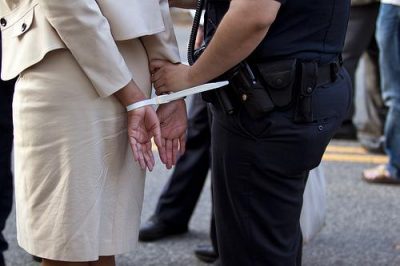
thisisbossi/Flickr
The once-dominant white majority now comprises just over half the nation’s public school students, yet school segregation remains entrenched. Consider what the Civil Rights Project, a research group based at the University of California, terms “intense segregation.” It’s becoming the norm at our public schools. Today, more than one-third of Latino and African-American students attend schools where whites comprise less than 10 percent of their classmates.
This kind of extreme segregation is far more common today for Latino children than it was in 1968. And more than one in seven African-American and Latino kids attend what the Civil Rights Project calls “apartheid” schools, where fewer than 1 percent of their classmates are white.
Unfortunately, traditional integration techniques won’t fix this entrenched problem. Boston’s public school system, for example, retains only 13 percent white students. How do you integrate that?
Meanwhile, the Boston-based group United for a Fair Economy reports that the nationwide incarceration rate is six times higher for blacks than whites, that blacks and Latinos endure a median family income only 57 percent as high as whites, and that African-American unemployment is roughly double the Caucasian rate.
You can’t run a successful society with such stark inequality.